Many foreign trade companies have two core questions before starting SEO:
Are people searching for the keywords I've chosen?
Will my website actually rank high on Google?
These are very realistic and well-posed questions.
These two questions are the life and death line for SEO effectiveness. If you choose the wrong keywords and no one searches, even the best articles will be useless. If your website isn't optimized properly, even if you have a lot of traffic for your keywords, you won't be able to rank high.
Today, we'll thoroughly explore these two key questions to help you determine whether SEO is worthwhile and whether you have a good chance of success.
1. Check if your keywords have search volume.
We don't pick keywords based on intuition or just because a salesperson says they "sound awesome." There are tools to check keyword search volume.
Common tools:
Google Keyword Planner (Google's official tool, free)
Ahrefs, SEMrush, Ubersuggest (paid, but with more detailed data)
Baidu Index (for domestic use): Suitable for identifying trends in the Chinese market
For example:
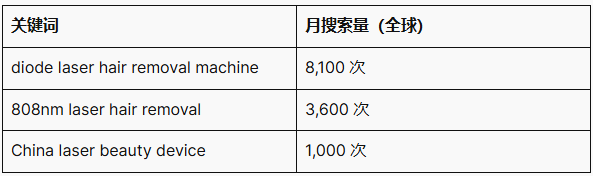
If you're selling laser beauty equipment, common keywords might include:
Words like these indicate real market activity, not just your assumption that people are searching for "high-end skincare equipment export factory."
Tips:
Choose keywords based on customer search habits, not your own product naming style.
2. I have keyword volume, but can I rank high?
This is the second major issue, and the most practical one.
"Others have been using this keyword for years. Do I, a new website, have a chance?"
"My competitors are foreigners. Will Google favor them?"
"Our website doesn't have much content. Will it rank high?"
To be honest, SEO is a real competition. There are only 10 spots on Google's homepage, and everyone wants to squeeze in. But the good news is:
With the right strategy and methods, new websites can rank high, especially for long-tail keywords and niche keywords.
For example:
You make plastic bottle preform injection molding machines.
You may not immediately grab the top spot for a keyword like "injection molding machine," but you can break into niche keywords like:
pet preform injection molding machine for bottle
China plastic bottle preform maker
injection molding machine for 28mm neck
These keywords don't have huge search volume, but competition is relatively low, making them easy for new websites to break into. Furthermore, the user behind each keyword has strong intent—they're genuinely searching for the product.
Another example:
If you make kitchen faucets, "faucet" might be too broad a term, but you could create:
kitchen pull-out faucet OEM
China brass faucet manufacturer
black matte kitchen faucet bulk order
These keywords not only rank well but are also likely to generate real inquiries.
3. Key Factors That Determine Your Ranking Potential
Choosing the right keywords is half the battle; the other half is whether your website is "noticed" by Google.
The following factors determine whether your website has ranking potential:
1. Is the website healthy?
Does it load quickly? (Preferably within 2 seconds)
Does the mobile user experience work well? (Over 60% of users search on mobile devices)
Is it HTTPS encrypted? Does it have a technical error page?
2. What is the quality of the content on the page?
Is it a dry product list? Does it include parameter descriptions, application scenarios, FAQs, and how-to tutorials?
Is it illustrated with text and pictures? Does it include a FAQ structure and video instructions?
3. Is the page optimized for keywords?
Do the title, URL, and description include keywords?
Is the content focused on user search intent?
4. Does the website have accumulated backlinks or social signals?
Is it cited by other websites?
Is your website promoted on LinkedIn, Facebook, and YouTube?
To sum it up:
Your website doesn't need to be perfect, but it does need to be professional.
Professional content, a clean structure, and clear keyword matching will help it rank high on Google.
4. How do you know if you can rank high? We'll test it for you!
No matter how much you talk, there's nothing better than a real-world test. All you need is these three things:
Your current official website link
The core keywords or product categories you want to promote
Your target market (country, language)
We'll use professional tools to create a free SEO assessment report covering keyword search volume + ranking difficulty + recommended strategies. This report will tell you:
Which keywords actually have volume
Which keywords are suitable for you to target
And where your existing website can be optimized
Get a free keyword and ranking assessment. Add us on WeChat to see your opportunities now!
At its I/O 2025 conference, Google officially unveiled its astonishing AI Mode feature.
This time, Google isn't just upgrading search; it's completely revolutionizing it.
Google CEO Pichai put it bluntly:
"The search box is no longer important. Google will become your AI assistant, getting things done for you."
What does that mean? No longer will you have to type in keywords and browse dozens of web pages. AI will directly understand your needs, provide a complete answer, and even complete tasks for you.
1.Is keyword ranking really outdated?
For those of us working in independent website SEO, this practically spells the end of the keyword ranking era.
Are you still wondering, "Will keyword XX make it to the front page?"
Sorry, users no longer use search that way.
Since the advent of ChatGPT, human search behavior has undergone fundamental changes.
Statistics show:
In the past, people searched using three to four words;
Now, the average search term has expanded to seven to eight words;
People no longer search for "keywords" but instead express complete questions or tasks to the AI.
Google, of course, knows all this. Why did Google finally stop hesitating and completely disrupt itself?
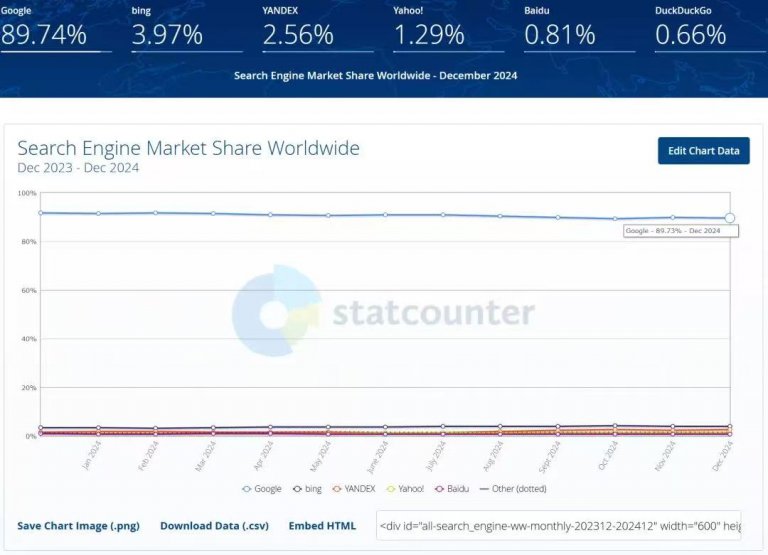
Because Google has always firmly controlled over 97% of the search market, but the rise of AI, represented by ChatGPT, has pushed it over 90% for the first time. If it doesn't disrupt itself, it will be eliminated by the market.
So, it finally chose to revolutionize itself: no longer a "search engine", but a "task executor", an AI assistant that helps you solve specific problems.
2.SEO must keep up with this pace
SEO isn't dead, but the old methods are no longer effective.
From now on, you must completely abandon the outdated mindset of "chasing keyword rankings."
The focus should no longer be on "making it to the front page," but rather:
Is your content valuable?
Can it truly solve customer problems?
Can AI understand it at a glance and be willing to cite it?
3.How to do SEO in the AI Mode era?
1. Content First, Not Keywords Second
Stop piling on keywords and pandering to search engines. Instead, focus on content quality and user value.
The more specific the user's question, the more focused and in-depth the content should be.
2. Structured Data + Clear Content Structure
Your website must be "understandable" by AI:
Clear titles
Orderly paragraphs
Mark up content with structured data (such as FAQs, product attributes, and author information).
3. Develop content around long-tail intent
Stop chasing "big" and "hot" keywords.
Your goal now is to match search intent at the level of "I'm looking for a kid-friendly living room rug under $800 that matches my light gray sofa."
AI recommendations aren't about keyword hits; they're about content that truly solves user problems.
4.Is your website ready for AI-powered search?
Google's changes signal a shift from the core of search to "getting results."
For everyone working on independent websites, content creation, and SEO, this is a major reshuffle.
It's not that SEO is no longer useful, but rather that you need to approach it smarter.
The real traffic engine has shifted to AI.
Your task isn't to snag keywords, but to:
Integrate yourself into the AI's answers.
So:
Quickly review your website content. Does it truly solve user problems?
Is it clearly structured and easily understood by AI?
Is its content structured around real user questions?
If you're still unsure how to make changes or how to proceed—
Please send me a private message to learn about our independent website SEO optimization solutions for the AI era.
We've helped over 1,000 foreign trade companies upgrade their SEO, ensuring their content is understood by AI, viewed by customers, and driven by business
Let your independent website enter the "recommended list" of AI search!
Anyone involved in international trade knows that an independent website is a path to global expansion. But building a website is just the beginning. SEO is what truly enables customers to find you, contact you, and place orders.
Many people treat SEO as a technical task, leaving it to website builders to "optimize it as a side job." But the truth is: Without SEO, no matter how beautiful your website is, it's just for show.
This article will clarify three things:
What exactly is independent website SEO?
What can international traders do to be reliable?
I've fallen into some pitfalls so you don't have to fall into them again.
This article isn't about concepts, but practical application. It's not a literal Google Doc; it's written for those of you who are on the same journey, drawing on 15 years of international trade experience.
1. What exactly is independent website SEO? Is it worth it?
In a nutshell: independent website SEO means getting customers to find your website on Google.
You don't actively attract customers; instead, customers actively search for "pet grooming scissors supplier" and then click through to your website. This is called organic traffic driven by SEO.
So, is SEO worth it? Let's first look at the facts:
70% of Google clicks come from organic rankings, while ad clicks account for less than 30%;
A single ad lead may cost you dozens of dollars, while the cost of an SEO lead is essentially negligible;
Advertising is "stop and go," while SEO is "content and traffic."
More importantly, Google is also helping small and medium-sized websites. At the Search Central Live NYC event, a Google spokesperson stated that they will focus more on increasing the visibility of independent websites and non-branded websites.
In other words, this is a window of opportunity. If you start now, your costs are minimal and your returns are stable.
2. How to do SEO? It's not as simple as just "adding a few keywords."
Many people think SEO is just about putting a few keywords in the title and adding a few tags in the backend, and that's it.
No. If you really want to do SEO well for your independent website, you must at least take these steps:
1. Clearly define your goals.
Do you want exposure? Inquiries? Or do you want to impress customers with your expertise?
For example, a client who sells laser hair removal devices initially had only a product description on their website, with pages like "Model XYZ-200, three adjustment settings," which had a very industrial feel. We later helped them add several content pages, such as:
How to choose a laser hair removal device suitable for Asian skin tones?
What's the difference between salon and home use?
What certifications are required for hair removal devices exported to Eastern Europe?
Guess what? These three content pages averaged more traffic than the product page and generated four comments.
You need to have a clear goal in mind so that your content has direction.
2. Don't rely on guesswork; rely on data.
I've seen too many people choose keywords based on intuition. Customers search for "hair clipper supplier," but you write "we are a professional manufacturer of cutting tools."
What's the point?
Use tools. For more professional search engines, try Ahrefs or SEMrush. If you want to save money, try DeepSeek. You can also use ChatGPT with a keyword script for bulk keyword development.
Keywords can be roughly divided into three categories:
Core keywords (e.g., folding camp chair)
Long-tail keywords (e.g., best folding chair for camping USA)
Brand keywords (e.g., your company name, or a combination of specific client needs)
Each keyword category must be "associated" with a corresponding page. Ranking for more keywords isn't about ranking for more keywords; it's about achieving a precise, one-to-one impact between keywords and pages.
3. Don't write content just for yourself; write for your customers.
Do your customers benefit from your content? Does Google think it's worth recommending?
Don't write press releases that claim "our company is customer-centric and our products are leading the way." No one will believe them.
You should write:
How do you use the product?
Which customers are using it? What results have they seen?
How do you solve common customer problems?
How do you compare similar products?
What precautions should I take when exporting to a certain destination? For example, I have a client who makes pneumatic nail guns. We wrote an article for them titled "How to Determine Whether the Nail Gun You're Buying Is Industrial-Grade." This article generated over 60 inquiries in a single year. Crucially, these clients already understand the term, and when they search for it, it indicates they already have a purchasing need.
This is the kind of targeted traffic driven by high-quality content.
3. Ensure a solid content structure; don't just rely on filling up the word count to get by.
No matter how good your content is, if it's poorly structured, Google won't understand it.
Here are a few tips, all based on my own mistakes:
Clear titles: One main title (H1) followed by logically organized subheadings (H2 and H3);
Each paragraph should be short, with three to five lines per paragraph to make it comfortable for the reader;
Keywords should appear naturally, for example, in the title, the first 100 words, or in image alt tags; don't cram them in;
Including authentic images, tables, and videos can increase page dwell time;
Each article should internally link to two to three other pages, such as product pages, FAQs, and contact forms;
Important pages must be accessible from the homepage or navigation; otherwise, Google won't be able to crawl them, and the content will be wasted.
I typically create a "content map" for my clients, for example, linking article A to product B, which in turn links to case study page C. This allows the website to function like an organic network, supporting the flow of authority.
4. The Second Half of SEO: Backlinks, Data, and Updates—Don't Forget Any of Them
SEO isn't just about writing content. Your content is like seedlings planted in a field; it needs fertilization, watering, and pruning.
Fertilization is about backlinks.
Watering is about updating.
Pruning is about monitoring data.
All three are essential.
1. Backlinks are like "other people saying hello"—they're more effective than your own self-promotion.
Google's unchanging logic is: if many people are willing to cite your website, you must have something valuable.
At this point, your website rankings will rise.
So how do you get others to link to you? Buying links directly? It's possible, but it requires caution.
The ideal sources of backlinks:
Industry blogs
B2B business information platforms
Websites upstream and downstream of the supply chain
Vertical forums
For example, if you make car chargers, getting a citation from a niche European auto parts site is far more valuable than getting a citation from a "whatever" directory.
My personal experience is to write your article first, then send it to the other party, saying you can quote it for free. Some webmasters will be willing to link to it if you think your content is good.
Of course, the easiest way is to find a reliable tool or service team to do this.
I recommend using Inquiry Cloud's RAG SEO service. Not only does it automatically generate content through AI, it also provides basic backlink building. Crucially, it integrates WhatsApp, website inquiries, and CRM, creating a closed-loop process. You know where your customers are coming from and whether your content is working.
It's better than relying on your gut feeling every day.
2. An unupdated website is like a dead website.
I've been lazy about this myself and suffered the consequences.
Two years ago, I had a client in the building materials industry. When their website was first built, their SEO performance was excellent, ranking in the top five on Google.
But after six months, they didn't update their content and didn't change their page structure. As a result, their ranking dropped by two points. Their keyword, which was originally ranked first, dropped to sixth, and their traffic plummeted.
Google's thinking is simple: Your website hasn't been updated in six months, so it's probably abandoned and worthless. So, I'll promote it to someone else.
So, I suggest:
Update at least one piece of content per week (it can be short, but it should be substantial);
Regularly review old articles and update them if they're outdated, such as replacing 2023 with 2025 and adding new case studies;
New product launches, new customer questions, and market changes are all good sources for content.
If you can't write it yourself, you can use AI to help you write a first draft, then manually revise the logic and polish the grammar. Don't just rely on AI to write and publish it directly; it's too easy to leave traces.
3. Look at the data; otherwise, you won't know if you're doing well.
You don't need to monitor Google Analytics or Search Console every day, but at least take time each week to check:
Which pages are getting traffic?
Which keywords are driving clicks?
Which pages have a high bounce rate?
Which inquiries are coming from your content pages?
Many times, you'll find that it's not your writing that's bad, but rather that you've put it in the wrong place. I was helping a client who sells pet products investigate a problem. They had an excellent article titled "Should a Cat Scratching Post Be Placed in the Living Room or on the Balcony?" However, they had placed it in a secondary directory with no navigation, making it completely unreachable on Google. After we adjusted the structure, the article immediately entered the top ten for cat-related keywords.
The data tells you where the problem lies; if you don't look, you'll never find it.
5. I've already helped you avoid the pitfalls you're bound to fall into.
Don't skip this section; it's the experience I've accumulated over 15 years of experience building foreign trade websites.
Pit 1: Posting only product pages without creating content
Product pages only attract traffic, not generate it. Customers aren't looking for "XYZ-102 model specifications," but rather informational questions like "How to choose a home electric pedicure tool."
If you only post product pages, Google won't know what your site is about.
Pit 2: Aggressive keyword stuffing
Many people, fearing keyword ranking problems, repeat keywords repeatedly on their pages: solar flood light supplier, solar flood light exporter, china solar flood light factory.
It's no surprise that Google will ban you.
Pit 3: Relying entirely on AI-generated content, making it look like AI-generated content
AI can be useful, but don't be lazy. AI-generated content is perfectly coherent, but its expression is often "neutral and generic." Without polishing, customers will immediately know it's not human-written, and Google will know it too.
Recommendation: Let AI create the draft, while humans revise the structure, change sentences, and add details.
6. I've used all the tools you need.
Finally, here are a few SEO tools I've used regularly:
Keyword research: Ahrefs (expensive but comprehensive), DeepSeek (domestic AI search), ChatGPT + industry scripts
Content production: ChatGPT (better with an industry knowledge base), Jasper (suitable for large-scale use)
Monitoring and analysis: Search Console (free and a must-have), GA4 (the new version is a bit complicated, but useful)
Heatmap visualization: Microsoft Clarity (completely free)
Backlink checking: Ahrefs, LinkMiner
Use these tools, set aside an afternoon every month to review your website's SEO performance. With consistent practice, you'll see real results.
Finally, from the bottom of my heart:
SEO is a slow process. Failure to achieve results is common, but when it does, it's the most reliable foundation for your independent website.
Advertising budgets will shrink, customer email addresses will change, and platform rules will change, but your own website's weight, content, and ranking will not disappear easily.
Client Background:The client is an enterprise specializing in the R&D, production, and sales of high-end e-cigarette. It is committed to providing e-cigarette users around the world with products that combine a sense of technology and experience. With core advantages such as multi-flavor switching, ultra-long battery life, and 0.02-second instant startup, the client’s products are sold in multiple international markets with the goal of becoming a global leader in premium e-cigarette experiences.Challenges:Fierce Market Competition and Differentiation Needs: The e-cigarette industry is highly saturated, with many similar brands. The client needed to highlight its unique product features—multi-flavor switching, ultra-long battery life, and intelligent mode adjustment—to stand out.Global Market Adaptation: Targeting consumers worldwide meant addressing diverse regional preferences, usage habits, and compliance requirements. The website had to balance multi-scenario product presentations with region-specific information delivery.Tight Launch Window: Given the rapid iteration of e-cigarette products, the website had to be developed and launched alongside new product rollouts to capture timely market opportunities.Solutions:Strategic Content Development:The RAG SEO team identified and refined the client’s core product advantages and user pain points, completing material integration and content system development within three months.Premium Visual and Functional Design:
Brand Identity Alignment: A sleek, technology-driven interface was created using dark backgrounds accented with vibrant product colors (e.g., ice blue, cherry red), highlighting product curves and interactive details such as curved screens and breathing light effects.
Experience-Centric Presentation: High-definition, multi-angle product images and dynamic demos (e.g., rotating flavor switching) were applied. Technical specifications like “0.02-second startup” and “ultra-long battery life” were translated into user-friendly messages such as “instant smoking response” and “no frequent replacements.”
Mobile-First Optimization: To accommodate global users, page speed was optimized (LCP ≤ 2.5s), navigation was streamlined, and functions like flavor filtering and product comparison were made accessible in one click across different network conditions.
Results:Enhanced Product Communication and User Engagement:The website effectively conveyed the unique advantages of the products, resulting in a 40% increase in user stay time. Clear product classification and focused display of technical features, such as "multi-flavor switching" and "ultra-long battery life," significantly boosted user awareness. The average stay time on core product pages rose from 1 minute 20 seconds to 2 minutes 8 seconds, and the click-through rate on product detail pages increased by 35%.Exceptional Global Inquiry and Conversion Outcomes: In collaboration with the product launch campaign, the website generated potential customer inquiries worth approximately 18 million yuan within six months. Furthermore, the order conversion rate in key markets (Europe, America, Southeast Asia) saw a 28% increase.Simultaneous Growth in Brand Awareness and Team Capability: The website became the cornerstone of the client's global brand presence, reinforcing the "technology + experience" positioning in the high-end e-cigarette market. Additionally, through collaboration with website operations, the client’s team gained a deep understanding of diverse global markets, and built a foreign trade team capable of cross-regional product explanations and inquiry follow-up, setting a strong foundation for future market expansion.
Client Background:
The client is a network and communication solution integrator specializing in intelligent marketing. It is committed to providing professional intelligent marketing solutions for various industries to help enterprises improve marketing efficiency.
Challenges:
The intelligent marketing industry is highly competitive. To stand out, the client needed a high-quality website capable of attracting potential customers and showcasing its advantages. Moreover, it is necessary to efficiently organize and integrate the company's existing materials, create a content system that conforms to the characteristics of intelligent marketing business and can clearly convey the company's advantages, and complete the website development quickly to seize market opportunities.
Solutions:
Website Content Sorting: Within only three months, the RAG SEO team reviewed, organized, and optimized the client’s materials. A content system was established with a focus on “industry solutions” and “technical scenario solutions,” highlighting the company’s core strengths in intelligent marketing.
Customized Website Design: A professional, concise, and technology-driven interface was created to clearly present intelligent marketing services, competitive advantages, and successful case studies. This ensured accurate communication of the client’s expertise and service value in the intelligent marketing field.
Results:
Within six months of the website’s launch and supporting advertising campaigns, the client received potential customer inquiries valued at approximately RMB 20 million. In parallel, the company developed a relatively mature foreign trade customer service and sales team, laying a solid foundation for future business expansion in intelligent marketing.
The client is a joint-stock high-tech enterprise specializing in the production and sales of mining equipment, with a focus on providing “overall concentrator services”. Its business scope covers design and R&D, mechanical manufacturing, equipment procurement, management services, mine operation, mine material procurement management, and industry resource integration. Challenges:
Displaying Complex Business: The client’s operations span design and R&D, equipment manufacturing, and EPC projects. These diverse offerings needed to be presented clearly and systematically on the website to help potential customers quickly understand and select services.
Meeting Global User Needs: As a global service provider, the website needed to cater to the browsing habits and language requirements of international users, offering multilingual versions to ensure that information is accessible worldwide.
Enhancing Website Performance: The website had to load quickly and operate smoothly across different network environments and devices, delivering an optimized user experience and reducing the risk of customer loss due to performance issues. Solutions:
Customized Website Design: A tailor-made website was developed to align with the client’s brand image and business characteristics. The interface was designed to be professional, modern, and technologically advanced, showcasing the company’s strength and credibility. The website structure was strategically planned, dividing into sections such as homepage, company introduction, product center, solutions, project cases, news center, service support, and contact us — making it easy for users to find the information they need.
Multilingual Version Support: To meet global customer demands, multilingual versions were implemented in English, Spanish, French, Arabic, and other languages. A professional translation team ensured accuracy and compliance with industry terminology standards, enabling effective communication with diverse international audiences.
Optimization of Product and Service Display: Various mining equipment was displayed in detail in the product center, with high - definition pictures, detailed parameters, application scenarios, and video introductions to help users fully understand the products. For complex services such as overall concentrator services and EPC projects, the service process, advantages, and successful cases were elaborated in the solutions section to demonstrate the company's strength and experience.
Website Performance Optimization: Advanced technologies and optimization strategies were applied to enhance website performance, such as code optimization, image compression, and CDN acceleration, which significantly shortened the website loading time. Multiple rounds of compatibility testing ensured smooth functionality and consistent display across PCs, tablets, smartphones, and other devices. Results:
Over six years, the client has transformed from a mineral processing machinery manufacturer to a mineral processing EPC service provider, with sales increasing nearly tenfold.
Rich graphic and video content has enabled the client to maintain a significant advantage in digital marketing models such as SEM, SEO, and SNS for a long time.
The client has accumulated more than one million fans on Facebook, becoming the most-followed company in the mining machinery industry and gaining huge brand benefits.
Client Background:
Our client is a top Chinese exporter of construction machinery, offering a wide range of products and services, including complete machines, spare parts, and components from leading Chinese brands. Their product lineup covers excavators, loaders, cranes, bulldozers, forklifts, road machinery, rollers/compactors, graders, aerial work platforms, pile drivers, concrete machinery, underground and mining equipment, off-highway mining dump trucks, special vehicles, sanitation machinery, port machinery, bridge machinery, commercial vehicles, and related parts. The client aimed to grow their global brand presence and increase business orders by improving their website’s SEO performance. Challenges:
The global construction machinery market is fiercely competitive, with the client up against well-established international brands. Their SEO strategy needed to address a diverse product range and services while targeting precise keywords. Given the variety of products spanning multiple technical fields and use cases, the SEO approach had to be flexible and thorough to ensure strong search engine performance for each product category. Solutions:
We leveraged RAG technology to create high-quality, tailored content that showcased the technical strengths and real-world applications of the client’s products. We also conducted extensive keyword research and developed customized SEO strategies for each product line and target market to boost global search engine rankings.On the technical side, we optimized the website’s structure, improved page load speeds, and enhanced the mobile user experience. Additionally, we focused on building high-quality backlinks from industry-relevant websites to strengthen the site’s authority and search engine credibility. Results:
Over the past 12 months, our SEO efforts delivered the following results:
Total Clicks: 1,743
Total Impressions: 36,400
Average Click-Through Rate: 4.8%
Average position: 14.5
Our ongoing SEO work significantly boosted the client’s website clicks and impressions, with a clear upward trend in recent months. The 4.8% average click-through rate far exceeds the industry standard, proving that our tailored content and optimization strategies effectively engaged the target audience. The average position of 14.5 reflects strong search engine visibility for key keywords.
Impact:
the client’s online presence in the global construction machinery market has seen remarkable improvement With our professional SEO services. Our customized strategies have elevated brand awareness and driven more international customers and business inquiries. As we continue to refine our SEO efforts, we anticipate steady growth in website traffic and conversions, supporting the client’s global expansion goals.
Client Background:Our client is a leading enterprise specializing in the wholesale and export of Chinese auto parts. They provide a comprehensive range of services, including the supply, wholesale, and export of auto parts for major Chinese brands such as MAXUS, MG, Chery, BYD, Changan, Geely, Great Wall Motors (GWM), and Chevrolet (GM China). Their extensive product line includes over 100,000 types of auto parts, covering engine components, chassis systems, steering systems, suspension components, body parts, wheels, shock absorbers, belts, bearings, filters, radiators, and more. The client’s business spans more than 60 countries worldwide.Challenges:The auto parts industry is highly competitive, particularly in the international market, where product quality and supply chain efficiency are critical. The client needed to enhance their SEO performance in global search markets to attract more overseas buyers and showcase their extensive product range and high-quality services. Additionally, covering long-tail keywords for multiple Chinese auto brands and models required a highly precise and targeted SEO strategy.Solutions:Using RAG technology, we created high-quality SEO content that highlighted the client’s diverse product offerings, supported brands, and service strengths. Through in-depth keyword research, we prioritized optimizing keywords tied to Chinese auto brands and top-selling models to maximize global search visibility. We also developed tailored content strategies for the client’s key markets, ensuring the content attracted potential customers while emphasizing the client’s professionalism and supply chain advantages.
On the technical side, we optimized the website’s structure, improved page load speeds, and enhanced the mobile user experience to ensure seamless access for global users. Additionally, we focused on building high-quality backlinks from authoritative industry websites to boost the site’s credibility and search engine trust.Results:Over the past 12 months, our SEO efforts delivered the following results:Total Clicks: 26,100 timesTotal Impressions: 762,000 timesAverage Click-Through Rate: 3.4%average position: 9.7Our professional SEO services significantly increased the client’s website clicks and impressions, with a clear upward trend in recent months. The 3.4% average click-through rate demonstrates the strong appeal of our customized content to the target audience. An average position of 9.7 shows that the client’s website consistently appeared on the first page of search results for multiple core keywords, achieving excellent visibility.
Client Background:
Our client is a technology-driven manufacturer and solution provider specializing in the professional audio-visual industry. Their core products include video wall controllers, hybrid matrix switchers, and AV&KM (audio-visual and keyboard/mouse) solutions for control room management. The client sought to boost brand awareness and attract more industry professionals by enhancing their website’s SEO performance. Challenges:
The audio-visual industry serves a highly specialized audience with stringent demands for product performance and technical specifications. The SEO strategy needed to address complex technical keywords and optimize for diverse markets and use cases. As the client’s products target the high-end market, the content had to clearly convey their technical expertise and product advantages to resonate with professional users. Solutions:
Using RAG technology, we created in-depth technical content, including detailed product descriptions, case studies, and technical white papers, to highlight the client’s product strengths. To improve search engine performance, we optimized core technical keywords and relevant long-tail keywords while implementing a targeted content marketing strategy to engage professional audiences.On the technical SEO front, we streamlined the website’s structure and code to ensure fast loading times and mobile compatibility. Additionally, we built high-quality, industry-relevant backlinks to enhance the website’s authority and search engine trust. Results:
Over the past 12 months, our SEO efforts delivered the following results:Total Clicks: 219,000 timesTotal Impressions: 7,030,000 timesAverage Click-Through Rate: 3%Average Ranking: 11.4Our sustained SEO strategy significantly improved the client’s search engine performance, with notable increases in both clicks and impressions. The 3.0% click-through rate reflects the success of our targeted content strategy in engaging professional users. An average position of 11.4 indicates that the client’s website frequently appeared on the first page of search results for key technical keywords.Impact:
With our expert SEO services, the client’s online presence in the audio-visual industry has seen substantial growth. Our technical content marketing and precise SEO optimizations have driven greater exposure and recognition in the high-end market. As we continue to refine our SEO efforts, we expect the client’s brand visibility and conversion rates to grow steadily, supporting their ongoing market expansion.
Client Background:
Our client is among China's top three manufacturers of laser beauty equipment, specializing in products like hair removal systems, wrinkle reduction devices, and skin rejuvenation solutions. They aimed to increase brand visibility and attract more international customers by enhancing their website’s SEO performance.Challenges:
The laser beauty equipment industry is intensely competitive, particularly in global markets, where the client must differentiate itself from numerous competitors. With a diverse target audience, their website needed optimization for various regions and languages to achieve strong search performance worldwide.Solutions:
We used rag technology to create targeted, high-quality content that highlighted the client’s technical strengths and competitive edge. To ensure global relevance, we conducted localized keyword research for key markets and implemented tailored SEO strategies.On the technical side, we optimized the website’s structure and load times while ensuring a seamless user experience across devices and languages. We also built high-quality backlinks from reputable industry websites to enhance the site’s authority and search engine rankings. Results:
Over the past 12 months, our SEO efforts delivered the following results:
Total Clicks: 9,858 timesTotal Impressions: 186,000 timesAverage Click-Through Rate (CTR): 5.3%Average position: 13.5
Our targeted SEO strategy significantly boosted website clicks and impressions. The 5.3% CTR, well above the industry average, shows strong user engagement with the content. An average position of 13.5 reflects solid visibility for key keywords in search results. Impact:
Our SEO services have greatly improved the client’s online presence in the laser beauty equipment industry. Our global SEO approach has driven increased brand recognition and attracted more international customers. As we continue to refine our efforts, we expect sustained growth in website traffic and conversions, supporting the client’s global market expansion.