Improving SEO with AI: Optimization Strategies and Practical Applications

What is SEO?
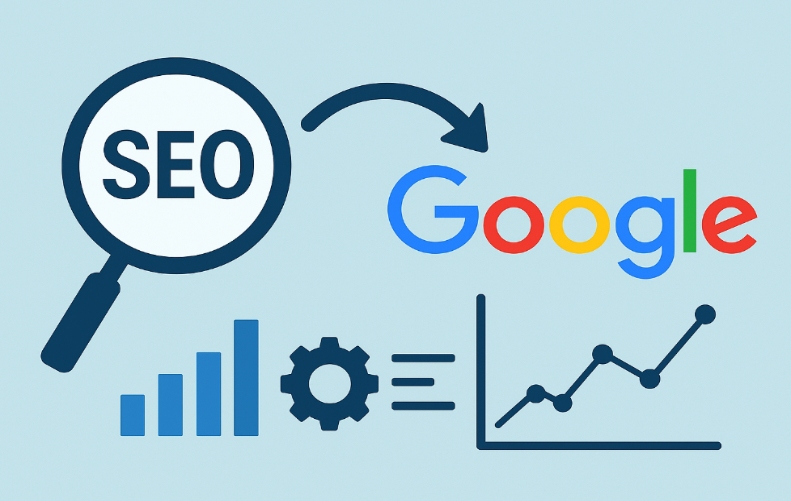
Simply put, SEO is about getting free traffic from Google to push your website to the first page of search results, attracting user clicks, and ultimately generating conversions within the website.
Why would Google give you traffic?
Google first considers search intent. If your content happens to solve a user's problem, such as providing tutorials, data analysis, or authoritative answers, Google considers it worth recommending. For example, if you can bring commercial value to a company, the boss will value you and allocate resources to you.
The Inseparable Relationship Between AI and SEO
How to Use AI to Write High-Quality Content?
To excel in SEO, content is king. Why?
Google's mission is to present users with "four highs": high quality, high authority, high originality, and high relevance. If your content meets these criteria, users will spend more time on your page, interact more, and be more satisfied. Google will then consider your content worth recommending, and your traffic will increase accordingly.
Our strategy is to gather all textual information and other materials we can obtain from our clients' websites and feed them to RAGSEO for learning. This creates a vast knowledge base. We then use instructions to generate the content we want. This process requires human modification and intervention to ensure that every piece is original.
To write a good article, each of the following steps is crucial:
- First, determine the main keywords and key products.This is usually determined by the company's main business, flagship products, or recent strong inquiries. For websites with average traffic, we focus on top-ranking user search terms in Google Search Console (GSC) impressions and clicks. Approximately 80% of our keywords should be based on keywords already ranking on GSC, while the remaining 20% should be developed for new keywords. This strategy aims to rank mid-to-high-level keywords first, then try for new keywords to create a breakthrough for the website. Alternatively, we can refer to competitors, using third-party tools to see which keywords they optimize in their articles and on their websites, the level of competition for these keywords, and their search volume. Further research is needed.
- Second, choose a topic. What isa good topic? We usually use high-traffic competitor websites to research their topic directions. At this point, two situations arise:
① How can you write a compelling article on a topic that others have already written about?
② How can you stand out on a topic that others haven't written about?
Therefore, this step requires careful research from content operators, not only on the topic itself but also on a thorough understanding of the product.
- Finally, to write high-quality content, our product must perfectly align with the topic and highlight its advantages and features to the greatest extent. This requires strong support from product content materialsoffered by Input is essential for output; this requires not only our efforts but also cooperation from both sides. Clients who are knowledgeable and willing to share will greatly benefit RAGSEO. Only by creating a treasure trove of knowledge can we have whatever we need.
The content includes two key aspects: internal links and FAQs.
①Internal links: This is a crucial step in converting articles into website links. Typical internal links connect to product pages. Anchor text selection is also critical; it should be natural and coherent, avoiding situations where internal links are all within the same paragraph. Otherwise, the article's weight will be unbalanced, and it may appear as internal link stuffing.
②The FAQ section usually asks questions based on the article's theme and content. Placing the questions users most want to know after reading the article and their pain points in the FAQ section will increase the time users spend on the page. Users will feel that you have grasped their psychology, which is more conducive to conversion.
 How to use AI to analyze SEO data and identify problems?
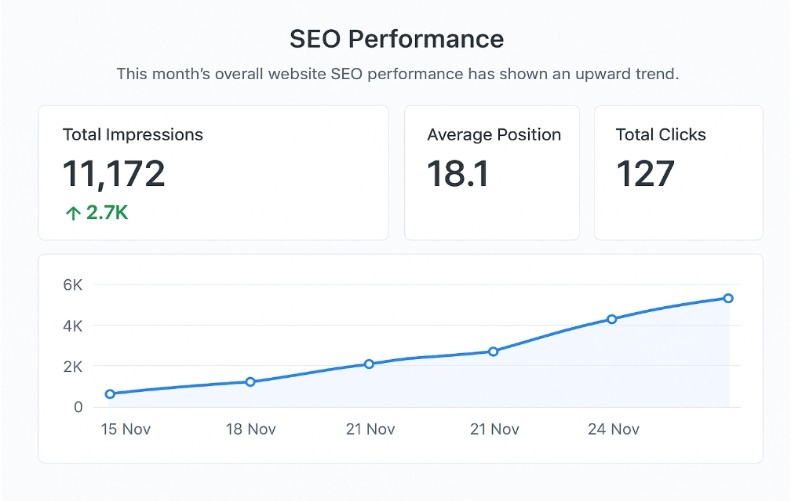
- We typically use AI to analyze changes in website data, such as increases or decreases, and trends. AI efficiently and accurately provides feedback on calculations in a short time, greatly improving our work efficiency.
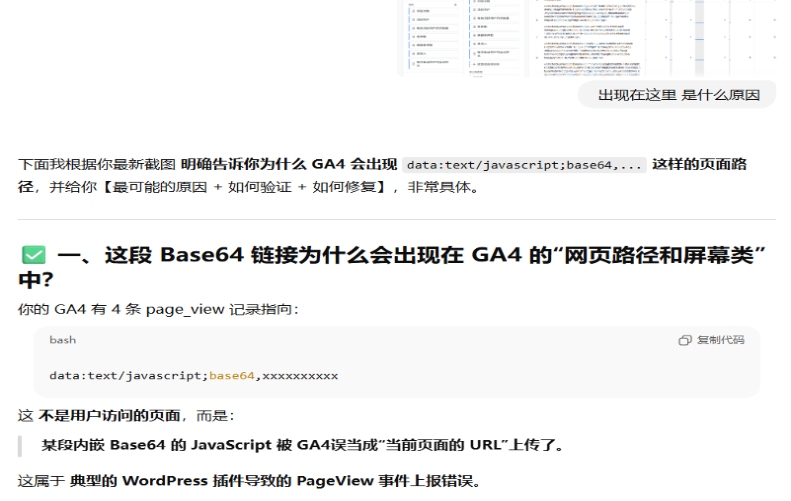
 AI can also be used to analyze data that is difficult to understand. It will provide you with detailed explanations of the most likely cause, how to verify it, and how to fix it. You can even directly send the problematic part as a screenshot to AI, which can identify the content in the image and provide solutions.
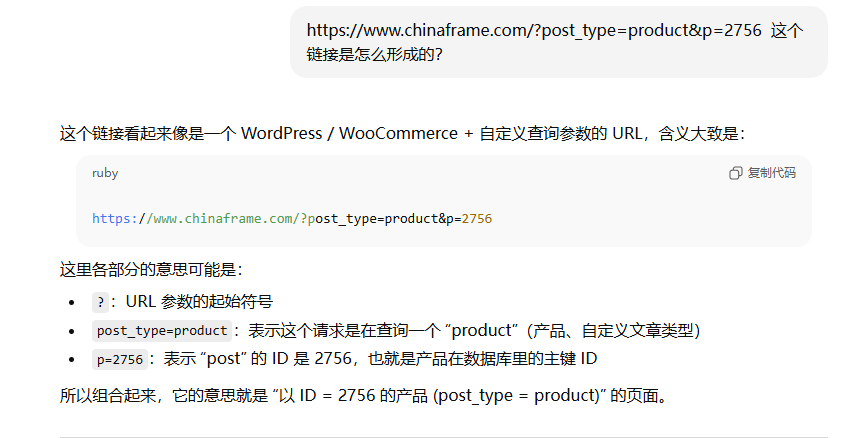
 When encountering URLs that seem problematic, AI can be used for analysis. It can usually explain the URL generation rules and the actual meaning behind each part, giving us a more accurate analytical perspective.
 How to quickly convert code using AI?
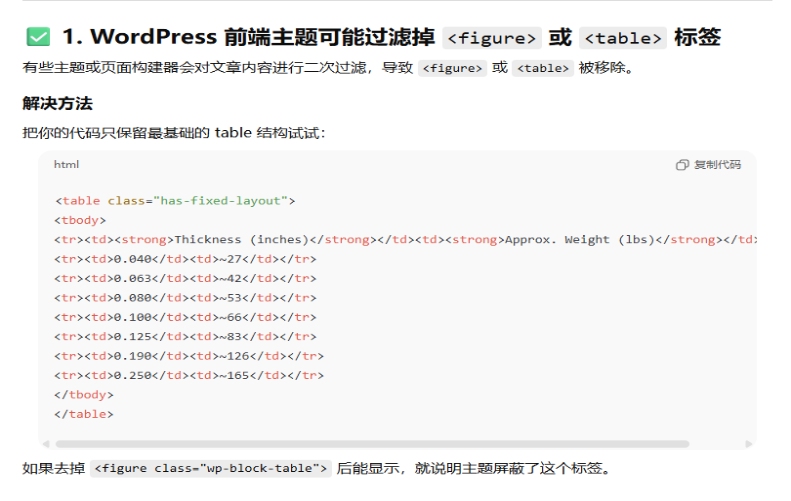
- Table issues are frequently reported during the publishing process in the WordPress admin panel. Different editors have different methods for adding table code. AI can be used to adjust and modify the original table code, preserving the parts that won't be filtered by the admin panel, thus ensuring the table is displayed effectively.
 At the same time, AI can generate or optimize structured data, improving the search engine's ability to understand content. Structured data FAQs need to be converted into JSON-LD Code format before being updated, and AI can also be used for format conversion.
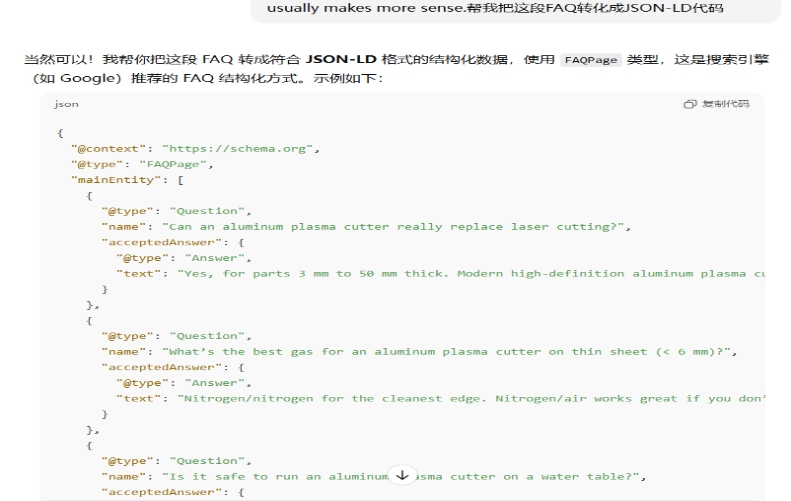 AI can also generate meta tags, alt text, and optimize titles. By placing keywords and their density in the instructions, AI can quickly convey the results to us. During the AI's thinking process, we can also copy new pages and issue instructions at the same time, which will make the process more efficient.
What is the fundamental difference between SEO and GEO?
SEO: I search with a specific intention, and it provide me with highly relevant and matching content.
GEO: I ask it a question without a specific intent, expecting an answer.
SEO + AI combines user search intent to quickly provide highly relevant content, while GEO + AI allows users to instantly receive customized answers and enjoy interactive fun. Both achieve rich and diverse effects in user experience.
The essence of GEO is achieving keyword search results. We use third-party platforms to publish articles, which is equivalent to building external links. The speed at which keyword search results become effective may far exceed that of SEO. However, SEO is a long-term and stable process. In this regard, Inquiry Cloud has absolute authority, with benchmark clients in various industries. The results of our clients' websites speak for themselves.
 What role does AI play in practical SEO?
AI doesn't screen customers for you; it gets you screened by customers. Its primary task is to output a large amount of textual information, such as product introductions and company development information, to the internet,making it easily crawlable and digestible for AI. It is necessary to learn to use AI as a sales channel, that is, to leverage AI's platform to deliver your content and attract a customer market that matches your needs.
FAQ
Q: Will using AI to write content get me flagged as an AI site by Google?
A: There's no explicit statement that using AI to write articles will automatically get you flagged as an AI site. Google prefers high-quality content that meets user search intent. The key issue isn't AI itself, but the lack of professional endorsement. Without human intervention, AI-generated content is bound to be superficial, vague, lacking in substance, and keyword-stuffed. AI can be used, but human editing is essential to ensure accuracy and coherence.
Q: How can I use AI to find long-tail keywords?
A: Method 1: Use main keywords + clear intent
Examples: Hair dryer + how to choose? Scarf + price budget; Electric fan + repair tutorial
Method 2: Use main keywords + pain points
Examples: Food-grade silicone + is it safe? Dehumidifier + warranty Beauty device + visible results
Q: How can I use AI to find competitors?
A: Method 1: Ask directly for recommendations of 10 top beauty device manufacturers.
This method may include brands that have used GEO (Google AdSense) to gain traction, so it's best to use third-party tools to verify their website data. Also, the AI's results may vary depending on VPN usage, and the regions it matches may differ from your actual search criteria.
Method 2: Search for keywords related to a website's main business, adding suffixes like "blog/tutorial/news hot topics," etc.
This will help find highly relevant competitor websites. Then, use third-party tools to check their traffic.
Method 3: Use precise matching. Use main keywords + industry type + service type + target audience + main business region/market for AI to perform precise matching.