A complete guide to independent website SEO: what it means, how to do it, optimization strategies, content layout and operation skills explained in one go


Anyone involved in international trade knows that an independent website is a path to global expansion. But building a website is just the beginning. SEO is what truly enables customers to find you, contact you, and place orders.
Many people treat SEO as a technical task, leaving it to website builders to "optimize it as a side job." But the truth is: Without SEO, no matter how beautiful your website is, it's just for show.
This article will clarify three things:
What exactly is independent website SEO?
What can international traders do to be reliable?
I've fallen into some pitfalls so you don't have to fall into them again.
This article isn't about concepts, but practical application. It's not a literal Google Doc; it's written for those of you who are on the same journey, drawing on 15 years of international trade experience.
1. What exactly is independent website SEO? Is it worth it?
In a nutshell: independent website SEO means getting customers to find your website on Google.
You don't actively attract customers; instead, customers actively search for "pet grooming scissors supplier" and then click through to your website. This is called organic traffic driven by SEO.
So, is SEO worth it? Let's first look at the facts:
70% of Google clicks come from organic rankings, while ad clicks account for less than 30%;
A single ad lead may cost you dozens of dollars, while the cost of an SEO lead is essentially negligible;
Advertising is "stop and go," while SEO is "content and traffic."
More importantly, Google is also helping small and medium-sized websites. At the Search Central Live NYC event, a Google spokesperson stated that they will focus more on increasing the visibility of independent websites and non-branded websites.
In other words, this is a window of opportunity. If you start now, your costs are minimal and your returns are stable.
2. How to do SEO? It's not as simple as just "adding a few keywords."
Many people think SEO is just about putting a few keywords in the title and adding a few tags in the backend, and that's it.
No. If you really want to do SEO well for your independent website, you must at least take these steps:
1. Clearly define your goals.
Do you want exposure? Inquiries? Or do you want to impress customers with your expertise?
For example, a client who sells laser hair removal devices initially had only a product description on their website, with pages like "Model XYZ-200, three adjustment settings," which had a very industrial feel. We later helped them add several content pages, such as:
How to choose a laser hair removal device suitable for Asian skin tones?
What's the difference between salon and home use?
What certifications are required for hair removal devices exported to Eastern Europe?
Guess what? These three content pages averaged more traffic than the product page and generated four comments.
You need to have a clear goal in mind so that your content has direction.
2. Don't rely on guesswork; rely on data.
I've seen too many people choose keywords based on intuition. Customers search for "hair clipper supplier," but you write "we are a professional manufacturer of cutting tools."
What's the point?
Use tools. For more professional search engines, try Ahrefs or SEMrush. If you want to save money, try DeepSeek. You can also use ChatGPT with a keyword script for bulk keyword development.
Keywords can be roughly divided into three categories:
Core keywords (e.g., folding camp chair)
Long-tail keywords (e.g., best folding chair for camping USA)
Brand keywords (e.g., your company name, or a combination of specific client needs)
Each keyword category must be "associated" with a corresponding page. Ranking for more keywords isn't about ranking for more keywords; it's about achieving a precise, one-to-one impact between keywords and pages.
3. Don't write content just for yourself; write for your customers.
Do your customers benefit from your content? Does Google think it's worth recommending?
Don't write press releases that claim "our company is customer-centric and our products are leading the way." No one will believe them.
You should write:
How do you use the product?
Which customers are using it? What results have they seen?
How do you solve common customer problems?
How do you compare similar products?
What precautions should I take when exporting to a certain destination? For example, I have a client who makes pneumatic nail guns. We wrote an article for them titled "How to Determine Whether the Nail Gun You're Buying Is Industrial-Grade." This article generated over 60 inquiries in a single year. Crucially, these clients already understand the term, and when they search for it, it indicates they already have a purchasing need.
This is the kind of targeted traffic driven by high-quality content.
3. Ensure a solid content structure; don't just rely on filling up the word count to get by.
No matter how good your content is, if it's poorly structured, Google won't understand it.
Here are a few tips, all based on my own mistakes:
Clear titles: One main title (H1) followed by logically organized subheadings (H2 and H3);
Each paragraph should be short, with three to five lines per paragraph to make it comfortable for the reader;
Keywords should appear naturally, for example, in the title, the first 100 words, or in image alt tags; don't cram them in;
Including authentic images, tables, and videos can increase page dwell time;
Each article should internally link to two to three other pages, such as product pages, FAQs, and contact forms;
Important pages must be accessible from the homepage or navigation; otherwise, Google won't be able to crawl them, and the content will be wasted.
I typically create a "content map" for my clients, for example, linking article A to product B, which in turn links to case study page C. This allows the website to function like an organic network, supporting the flow of authority.
4. The Second Half of SEO: Backlinks, Data, and Updates—Don't Forget Any of Them
SEO isn't just about writing content. Your content is like seedlings planted in a field; it needs fertilization, watering, and pruning.
Fertilization is about backlinks.
Watering is about updating.
Pruning is about monitoring data.
All three are essential.
1. Backlinks are like "other people saying hello"—they're more effective than your own self-promotion.
Google's unchanging logic is: if many people are willing to cite your website, you must have something valuable.
At this point, your website rankings will rise.
So how do you get others to link to you? Buying links directly? It's possible, but it requires caution.
The ideal sources of backlinks:
Industry blogs
B2B business information platforms
Websites upstream and downstream of the supply chain
Vertical forums
For example, if you make car chargers, getting a citation from a niche European auto parts site is far more valuable than getting a citation from a "whatever" directory.
My personal experience is to write your article first, then send it to the other party, saying you can quote it for free. Some webmasters will be willing to link to it if you think your content is good.
Of course, the easiest way is to find a reliable tool or service team to do this.
I recommend using Inquiry Cloud's RAG SEO service. Not only does it automatically generate content through AI, it also provides basic backlink building. Crucially, it integrates WhatsApp, website inquiries, and CRM, creating a closed-loop process. You know where your customers are coming from and whether your content is working.
It's better than relying on your gut feeling every day.
2. An unupdated website is like a dead website.
I've been lazy about this myself and suffered the consequences.
Two years ago, I had a client in the building materials industry. When their website was first built, their SEO performance was excellent, ranking in the top five on Google.
But after six months, they didn't update their content and didn't change their page structure. As a result, their ranking dropped by two points. Their keyword, which was originally ranked first, dropped to sixth, and their traffic plummeted.
Google's thinking is simple: Your website hasn't been updated in six months, so it's probably abandoned and worthless. So, I'll promote it to someone else.
So, I suggest:
Update at least one piece of content per week (it can be short, but it should be substantial);
Regularly review old articles and update them if they're outdated, such as replacing 2023 with 2025 and adding new case studies;
New product launches, new customer questions, and market changes are all good sources for content.
If you can't write it yourself, you can use AI to help you write a first draft, then manually revise the logic and polish the grammar. Don't just rely on AI to write and publish it directly; it's too easy to leave traces.
3. Look at the data; otherwise, you won't know if you're doing well.
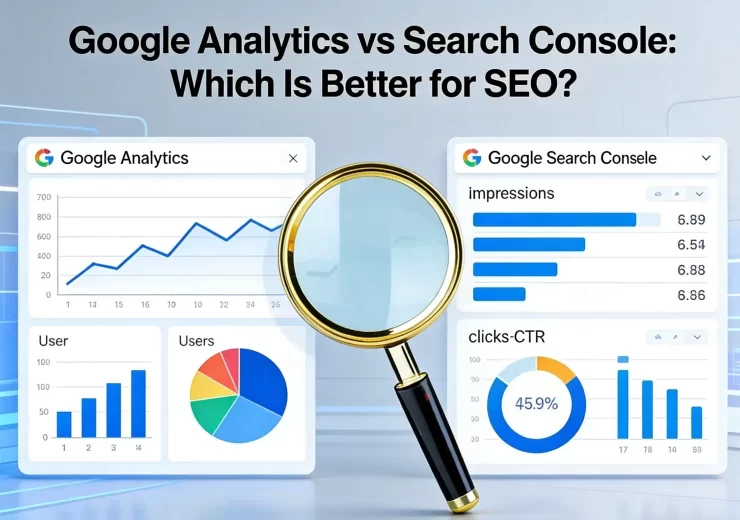
You don't need to monitor Google Analytics or Search Console every day, but at least take time each week to check:
- Which pages are getting traffic?
- Which keywords are driving clicks?
- Which pages have a high bounce rate?
- Which inquiries are coming from your content pages?
Many times, you'll find that it's not your writing that's bad, but rather that you've put it in the wrong place. I was helping a client who sells pet products investigate a problem. They had an excellent article titled "Should a Cat Scratching Post Be Placed in the Living Room or on the Balcony?" However, they had placed it in a secondary directory with no navigation, making it completely unreachable on Google. After we adjusted the structure, the article immediately entered the top ten for cat-related keywords.
The data tells you where the problem lies; if you don't look, you'll never find it.
5. I've already helped you avoid the pitfalls you're bound to fall into.
Don't skip this section; it's the experience I've accumulated over 15 years of experience building foreign trade websites.
Pit 1: Posting only product pages without creating content
Product pages only attract traffic, not generate it. Customers aren't looking for "XYZ-102 model specifications," but rather informational questions like "How to choose a home electric pedicure tool."
If you only post product pages, Google won't know what your site is about.
Pit 2: Aggressive keyword stuffing
Many people, fearing keyword ranking problems, repeat keywords repeatedly on their pages: solar flood light supplier, solar flood light exporter, china solar flood light factory.
It's no surprise that Google will ban you.
Pit 3: Relying entirely on AI-generated content, making it look like AI-generated content
AI can be useful, but don't be lazy. AI-generated content is perfectly coherent, but its expression is often "neutral and generic." Without polishing, customers will immediately know it's not human-written, and Google will know it too.
Recommendation: Let AI create the draft, while humans revise the structure, change sentences, and add details.
6. I've used all the tools you need.
Finally, here are a few SEO tools I've used regularly:
- Keyword research: Ahrefs (expensive but comprehensive), DeepSeek (domestic AI search), ChatGPT + industry scripts
- Content production: ChatGPT (better with an industry knowledge base), Jasper (suitable for large-scale use)
- Monitoring and analysis: Search Console (free and a must-have), GA4 (the new version is a bit complicated, but useful)
- Heatmap visualization: Microsoft Clarity (completely free)
- Backlink checking: Ahrefs, LinkMiner
Use these tools, set aside an afternoon every month to review your website's SEO performance. With consistent practice, you'll see real results.
Finally, from the bottom of my heart:
SEO is a slow process. Failure to achieve results is common, but when it does, it's the most reliable foundation for your independent website.
Advertising budgets will shrink, customer email addresses will change, and platform rules will change, but your own website's weight, content, and ranking will not disappear easily.